Heatwave impacts US events
US heatwave threatens Independence Day and World Cup events. Climate change makes extreme temperatures ‘virtually impossible’ otherwise, say researchers. Stay i

US heatwave threatens 250th anniversary events and World Cup
Heatwave impacts US events
A significant heatwave currently affecting large parts of the United States is posing potential threats to both Independence Day celebrations and upcoming World Cup matches. Researchers have indicated that such extreme temperatures would have been “virtually impossible” without the ongoing climate crisis. This assessment comes from World Weather Attribution, an international group of climate researchers, as a heat dome brings hot and humid conditions across central and eastern US, and southern Canada.
The analysis suggests that while these heatwaves are rare, occurring approximately once every 200 years even with climate change, they would not have been expected to occur once in many thousands of years if planet-warming emissions had not increased global temperatures by 1.4C (2.5F). The US capital, Washington DC, is anticipating soaring temperatures as thousands gather for the country’s 250th anniversary celebrations.

World Cup matches face extreme conditions
Several World Cup matches are expected to be significantly impacted by the heatwave. The game between France and Paraguay in Philadelphia on Saturday is forecast to experience extreme heat levels. A global players’ union has previously stated that such conditions should lead to the delay or postponement of games. Additionally, a match between Cape Verde and Argentina is expected to be played under potentially dangerous heat and humidity.
The National Weather Service predicts peak heat indexes, which combine air temperature and humidity, to range between 100F to 115F (37.78C to 46.11C) across the eastern and central US through the end of the week. High night temperatures are unlikely to offer much relief, and record temperatures could be broken. Earlier in the week, French players used field sprinklers to cool down during their match against Sweden in New Jersey, where temperatures reached 90F (32.22C).

Player and fan safety concerns
Concerns about extreme heat during the games in the U.S., Canada and Mexico have been growing, with some scientists saying that FIFA’s heat safety guidelines are “inadequate” and “impossible to justify,” even for heat acclimatized players. For spectators, these conditions could result in slower and less intense games.
The world has warmed by approximately 1.26F (0.7C) in the last three decades since the US last hosted the World Cup, according to the climate monitoring group Berkeley Earth. This increase in global temperatures intensifies and makes heatwaves and other severe weather events more common. The humid heat affecting the country and parts of Canada would have been “virtually impossible” without climate change, according to scientists from World Weather Attribution.
Heat is a primary cause of death for athletes. When individuals exert themselves on a particularly hot day, the likelihood of experiencing heat-related illness or death increases significantly. Symptoms of exertional heat illness include extreme fatigue, impaired performance, headache, irritability, nausea, dizziness, cramping, and dehydration. Exertional heat stroke, which requires immediate medical attention, is the third leading cause of death in athletes.
FIFA’s guidelines state that a match could be postponed if the wet bulb globe temperature reaches 89.60F (32C). However, the players’ union FIFPRO and the American College of Sports Medicine have called for matches to be delayed at 82.40F (28C) for safety. Temperatures are forecast to exceed 100F (37.78C) during Saturday’s game in Philadelphia.
Mitigation efforts and future outlook
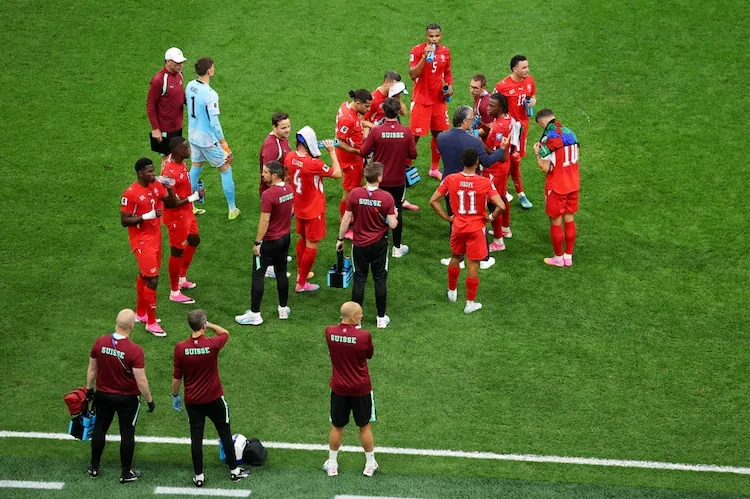
To protect players and referees from extreme heat illness, mandatory three-minute hydration breaks are incorporated midway through each half. However, these breaks have drawn criticism, with some suggesting they disrupt the game’s flow and others advocating for longer breaks to allow for more effective cooling and rehydration. Matches during peak heat hours are also limited, with those expected in warmer windows prioritized for covered stadiums, according to FIFA.
Guilherme Passos, a sport scientist with the Brazilian Football Federation, monitors and prepares the Brazil national team for extreme heat. He has assisted the team in acclimatizing to the US heat, noting that direct exposure to the hottest part of the day can diminish training quality. They utilize saunas or hot baths for heat training during the competition. When Brazil hosted the World Cup in 2014, players covered less distance and reduced high-speed running, instead focusing on technical and tactical precision.
Beyond the players, many soccer fans consuming alcohol while watching the World Cup are also at risk in the heat. Cities and stadiums have increased access to shade, cooling areas, water, and medical personnel are stationed in FIFA Fan Festivals and around stadiums. The 2022 World Cup in Qatar was moved from summer to winter due to the extreme heat threat, and temperatures soared during last year’s Club World Cup.
Read Also
Source: theguardian.com

Rohan Gupta
Sports Reporter