Argentina could face disciplinary action after displaying Falklands banner
Argentina faces FIFA disciplinary action after displaying a ‘Las Malvinas son Argentinas’ banner post-World Cup semi-final win against England, reigniting the F
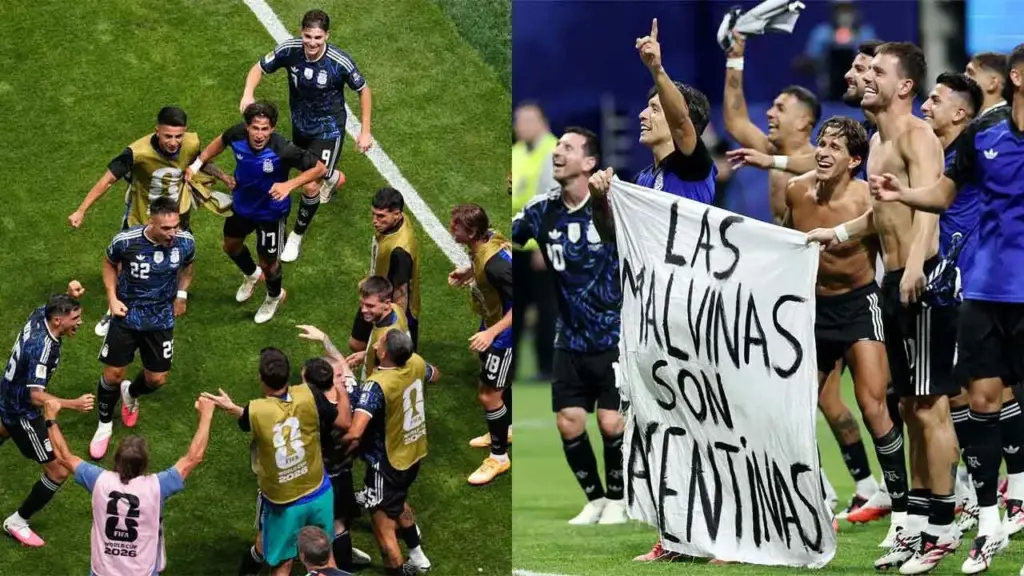
World Cup 2026: Argentina could face disciplinary action for displaying Falklands banner after beating England
Post-Match Celebrations and Controversy
Argentina faces potential disciplinary action from FIFA following their World Cup 2026 semi-final victory against England. After securing a 2-1 win in Atlanta, players celebrated on the pitch with a banner that read “Las Malvinas son Argentinas,” which translates to “The Falklands are Argentine.” This display has sparked controversy due to the ongoing sovereignty dispute over the Falkland Islands, a British overseas territory.
The banner was reportedly first seen among supporters in the stands before midfielder Giovani Lo Celso and defender Nicolas Otamendi held it up. Lo Celso later laid the banner out on the pitch during the celebrations at Mercedes-Benz Stadium. This incident occurred after Argentina staged a dramatic late comeback, scoring two goals to defeat Thomas Tuchel’s side and secure a spot in Sunday’s final against Spain.
Argentina’s vice-president, Victoria Villarruel, also commented on the match, posting on X that “it wasn’t just another match” and reiterating that “The Falklands are Argentine.” She added that while bringing such banners to the stadium might be banned, the sentiment remains strong among the populace. Prior to the semi-final, Villarruel had stated that the game was about “putting the invaders in their place.”
This is not the first time the Argentine Football Association has faced penalties for similar actions. In 2014, FIFA fined the association £20,000 after players displayed a banner with the same message before a friendly match against Slovenia. FIFA had then stated that the gesture violated rules concerning political action and team misconduct.
The Falklands Dispute and FIFA Regulations
The Falkland Islands, known as ‘Las Malvinas’ in Argentina, are situated approximately 300 miles off Argentina’s east coast. The sovereignty dispute between Britain and Argentina dates back to the early 19th century, with Britain re-establishing control in 1832. The conflict escalated into the Falklands War in 1982, which lasted from April to June, resulting in the deaths of 655 Argentine and 255 British servicemen, along with three people from the islands.
In response to the recent display, Argentina’s Ministry of Foreign Affairs has issued a statement reaffirming the country’s claim over the islands. The Ministry also protested to the United Kingdom regarding the movements of the HMS Medway, which they claim were unnotified and transited through Argentine Territorial Sea, violating bilateral agreements. The Argentine government views these actions as unilateral and incompatible with United Nations resolutions.
FIFA and the International Football Association Board (IFAB) have explicit rules prohibiting political flags, slogans, and symbols during matches. Their regulations state that equipment must not feature any political, religious, or personal slogans, statements, or images. Players are also prohibited from revealing undergarments with such displays. Any breach of these rules can lead to sanctions for the player or team by the competition organiser, national football association, or FIFA itself.
Furthermore, if the banner is deemed political, it could also violate FIFA’s stadium code of conduct. This code lists prohibited items, including materials such as banners, flags, and apparel that are political, offensive, or discriminatory in nature. These regulations aim to prevent any form of discrimination based on various factors, including political opinion.
Manager’s Stance and Increased Security
Despite the post-match incident, Argentina manager Lionel Scaloni had previously stated his intention not to mix football and politics. Ahead of the semi-final, Scaloni emphasised that the match was purely a football game and that he would not conflate it with historical events, out of respect for the sad period in history. He acknowledged the memory of those involved in the conflict but stressed that football and politics should not be confused.
The semi-final match itself, which saw England lose to late goals from Enzo Fernandez and Lautaro Martinez, was held under heightened security measures. This was implemented due to the historical tensions between the two nations, highlighting the sensitive nature of their encounters.
Argentina players had also reportedly sung chants referencing the Falklands, as well as football legends Diego Maradona and Lionel Messi, after their 3-2 victory over Egypt in the last 16. The controversy surrounding the banner display could lead to further scrutiny from FIFA regarding the team’s conduct.
The Ministry of Foreign Affairs’ official communiqué on July 13 reiterated Argentina’s legitimate and imprescriptible sovereign rights over the Malvinas Islands, South Georgia, the South Sandwich Islands, and the surrounding maritime areas.
Read Also
- Argentine VP calls England 'usurping pirates' ahead of World Cup semifinal clash
- FIFA defends referee after France's World Cup semifinal criticism
- Atlanta: England's World Cup semi-final loss to Argentina will 'haunt' Dan Burn
- New York New Jersey: Messi leads Golden Boot race as World Cup final approaches
Source: bbc.com

Rohan Gupta
Sports Reporter