Gill’s Edgbaston chase highlights his role as India’s ODI batting standard-bearer
Shubman Gill’s unbeaten 80 at Edgbaston led India to victory against England in the 1st ODI. Discover how his crucial innings cemented his role as India’s batti
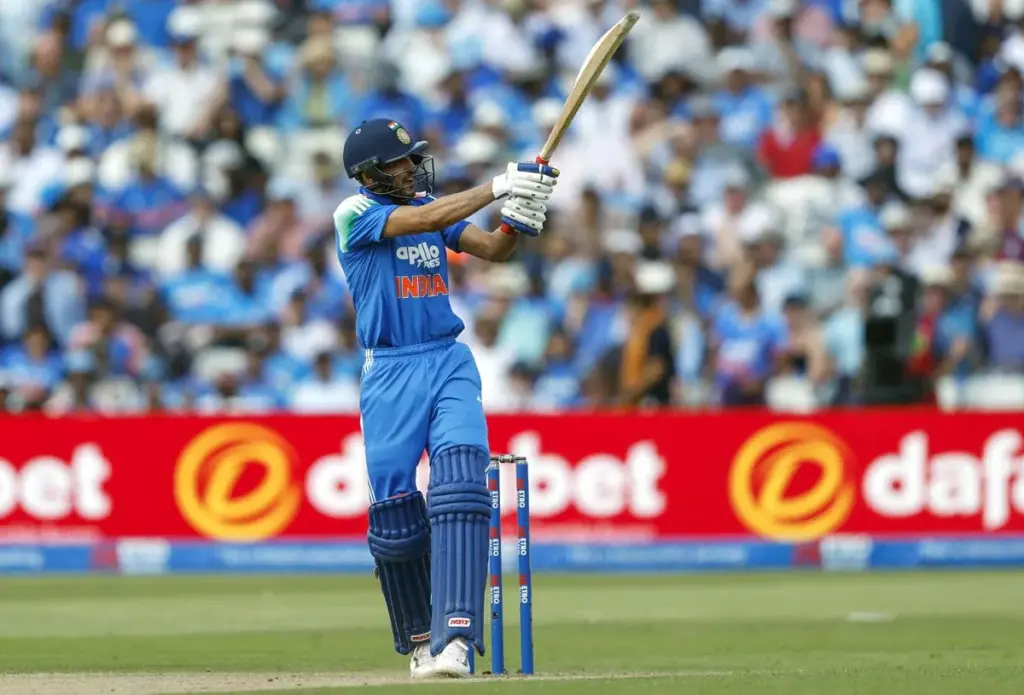
Shubman Gill's chase at Edgbaston showed why India already have Virat Kohli's ODI heir - The Times of India
Shubman Gill played a significant innings during India‘s chase in the first One Day International (ODI) against England at Edgbaston. Despite experiencing cramps that led him to retire from the field, Gill scored an unbeaten 80 runs. His performance was crucial in India’s six-wicket victory.
Gill’s departure, followed by quick wickets from Shreyas Iyer and KL Rahul, created some tension for India. However, contributions from Washington Sundar and Axar Patel helped secure the win, ensuring Gill’s efforts were not in vain.
Gill’s Strategic Batting Performance
During India’s pursuit of 259 runs, Gill and Iyer formed a vital 101-run partnership from 103 balls. This stand was particularly important after India lost early wickets, with Rohit Sharma (11) and Virat Kohli (5) dismissed cheaply, leaving the scoreboard at 48 for 2 after 8.3 overs.
Gill’s innings of 80 runs, scored off 75 balls, included 11 fours and one six, and he spent 120 minutes at the crease. Initially, the 26-year-old focused on absorbing pressure from seam bowlers Jofra Archer and Josh Tongue on a pitch that assisted new-ball bowlers with pace, variable bounce, and lateral movement.
While Rohit Sharma adopted a more cautious approach, Gill meticulously paced his innings. After hitting consecutive boundaries to start, he remained relatively quiet for the next 13 deliveries, scoring only four runs. He then dealt in singles and dot balls against England’s pace attack, including Sam Curran.
The strategy shifted, and Gill began to target spinners Adil Rashid, Jacob Bethell, and Will Jacks, as well as Liam Dawson. He executed a sweep shot towards backward square leg in one over and followed it with an inside-out loft over extra cover for another boundary in the subsequent over.
Even after receiving treatment for cramps, Gill maintained his tempo, picking up singles and doubles by pushing the ball to long-on and long-off. His ability to attack when necessary and rotate the strike effectively, without resorting to slogging or constant aerial shots, distinguished his performance.
Of his 11 boundaries, five were hit on the off side and six on the leg side. His sole six, off Josh Tongue, went over the deep backward square leg boundary. The cut shot proved to be his most effective stroke, yielding 16 runs, including two boundaries.
Gill’s knock at Edgbaston demonstrated that successful ODI chases often rely on clear thinking, adaptability, and confidence in the process, rather than continuous aggression. He accurately assessed the conditions, attacking only when appropriate and ensuring India remained focused on the target.
The cramps prevented him from finishing the innings, but his contribution had already set India on the path to victory. This innings further solidified Gill’s position as a significant player for India’s next generation of ODI batting.
Injury Concerns for India
In other news from the first ODI, India faced another injury scare when fast bowler Gurnoor Brar left the field during his final over. Brar, playing his first international match in England, had earlier contributed to England’s collapse by taking two quick wickets.
Brar experienced discomfort at the end of his run-up in the 48th over and signaled to the dressing room. The Indian physio attended to him, stretching his calves and hamstring, but Brar was unable to continue. Axar Patel completed the remainder of the over.
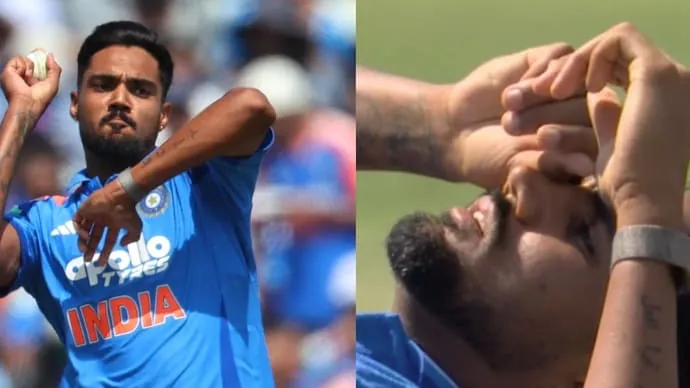
Before his injury, Brar had a notable performance. After England had reached 61 without loss, he initiated a collapse that shifted momentum in India’s favor. He adjusted his length after conceding boundaries in his initial overs, striking twice within three deliveries.
He first dismissed Jacob Bethell with a rising delivery that resulted in a catch and then removed Ben Duckett with a ball that climbed awkwardly off the surface. Duckett’s dismissal was secured by a catch from Jasprit Bumrah near the third-man boundary.
These two wickets led to England’s slump from 61 without loss to 107 for 6. Jasprit Bumrah, returning after a six-week break, and Prasidh Krishna continued to take wickets. England eventually recovered due to a 121-run partnership between Joe Root and Liam Dawson for the seventh wicket. Root scored 76, and Dawson made 68, helping England post a total of 258.
Brar finished with figures of 2 for 61 from nine overs. The extent of his injury remains unknown, and his fitness will be closely monitored ahead of the remaining two ODIs. This incident adds to India’s recent injury concerns, with Harshit Rana already ruled out of the tour due to a hamstring injury, and all-rounders Hardik Pandya and Nitish Kumar Reddy also unavailable.
Gill’s availability for the second ODI in Cardiff on Thursday is expected, as he stated he anticipated being fit for the match.
Read Also
- FIFA defends referee after France's World Cup semifinal criticism
- Atlanta: England's World Cup semi-final loss to Argentina will 'haunt' Dan Burn
- New York New Jersey: Messi leads Golden Boot race as World Cup final approaches
- Argentina could face disciplinary action after displaying Falklands banner
Source: timesofindia.indiatimes.com

Rohan Gupta
Sports Reporter