New York faces smoke, travel concerns ahead of World Cup final
New York faces smoke and travel concerns ahead of the World Cup final at MetLife Stadium. Canadian wildfires impact air quality, raising logistical challenges.
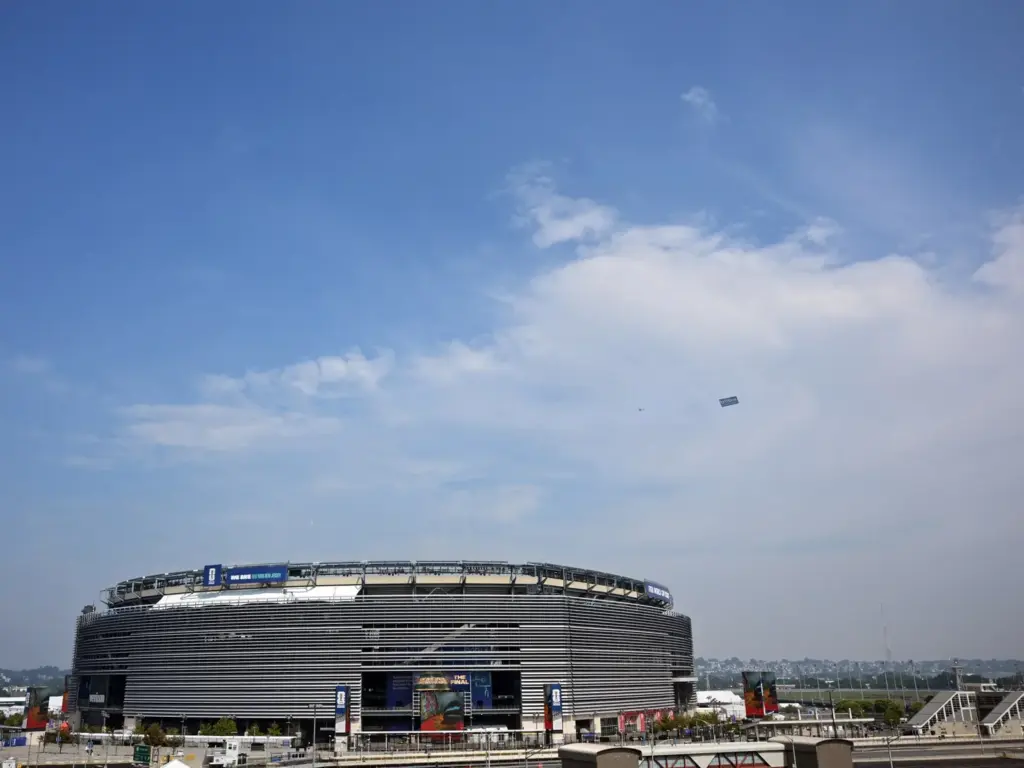
Smoke, travel and Trump threaten New York’s grand World Cup finale
New York City faces environmental and logistical hurdles
New York City and the surrounding region are grappling with significant environmental and logistical challenges as they prepare to host the World Cup final on Sunday. Thick smoke from Canadian wildfires has impacted air quality across the eastern seaboard, raising concerns for the major sporting event. The final is scheduled to take place at the New York New Jersey Stadium, also known as MetLife Stadium, in New Jersey.
The smoke has led to air quality alerts, with conditions in some areas described as “very unhealthy.” On Thursday, the air quality advisory was elevated from “unhealthy” to “very unhealthy.” Emergency management officials in New York City issued a citywide code red from Tuesday to Thursday, advising residents to remain indoors unless necessary and to avoid strenuous physical activity. This situation presents an unexpected challenge for the final, which is anticipated to draw a global television audience of 1.6 billion.
Visibility in downtown Manhattan was significantly reduced, with the Statue of Liberty temporarily obscured from view across the Hudson River. The poor conditions also led to the cancellation of numerous flights from Newark Airport in New Jersey. While conditions began to improve on Friday, and rain is forecast for Saturday, officials are hopeful that the situation will clear by Sunday.
Impact on sporting events and travel
The widespread smoke has already affected other sporting events. A National Women’s Soccer League (NWSL) match between Gotham and Washington Spirit, held in Queens on Wednesday, was played amidst an orange-brown haze. During this match, players were instructed to take two additional breaks in each half, adhering to the NWSL’s poor air policy.
Beyond the environmental concerns, travel to the MetLife Stadium poses another significant hurdle. The stadium is known among NFL fans for its limited public transport options and the difficulties associated with navigating the Lincoln Tunnel, which connects Manhattan to New Jersey. Parking at the stadium on Sunday will be restricted to guests and VIPs.
The cost of travel has also been a point of discussion. While the initial matchday return price of $150 for New Jersey Transit trains was reduced to $98 following intervention from the governments of New York and New Jersey, it remains a considerable amount for what is a relatively short journey. Shuttle buses from Manhattan will be available for $20.
Presidential presence and FIFA’s preparations
The presence of Donald Trump is also anticipated, with his helicopter, Marine One, expected to fly over the stadium before landing at nearby Teterboro Airport. FIFA has been in discussions regarding the former president’s involvement. There was a meeting at Trump Tower on Friday afternoon, which necessitated road closures on Fifth Avenue, causing disruptions.
FIFA has stated that negative air quality from the wildfires does not currently pose a threat to the World Cup final. Earlier on Friday, tournament organizers indicated they were closely monitoring the situation. An executive director from the White House World Cup task force mentioned that someone from the National Weather Service is stationed at FIFA headquarters to assist with monitoring.
Despite the challenges, the city has shown strong engagement with the World Cup. All seven previous games held at MetLife Stadium have been sold out. Bookings for restaurants and bars to watch the semi-final match between England and Argentina this week were difficult to secure.
Read Also
Source: theguardian.com

Rohan Gupta
Sports Reporter