White House defends Argentina team’s free speech over Falklands banner
White House defends Argentina team’s free speech after they displayed a ‘Las Malvinas son Argentinas’ banner post-World Cup semi-final win. Read more on this di
White House defends Argentina team over Falklands banner
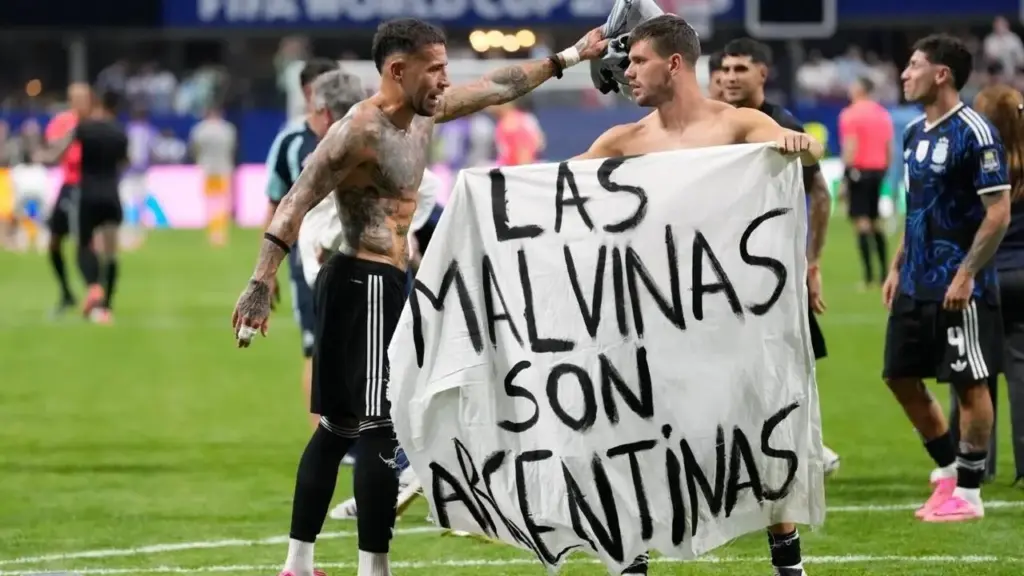
Argentina team displays controversial banner
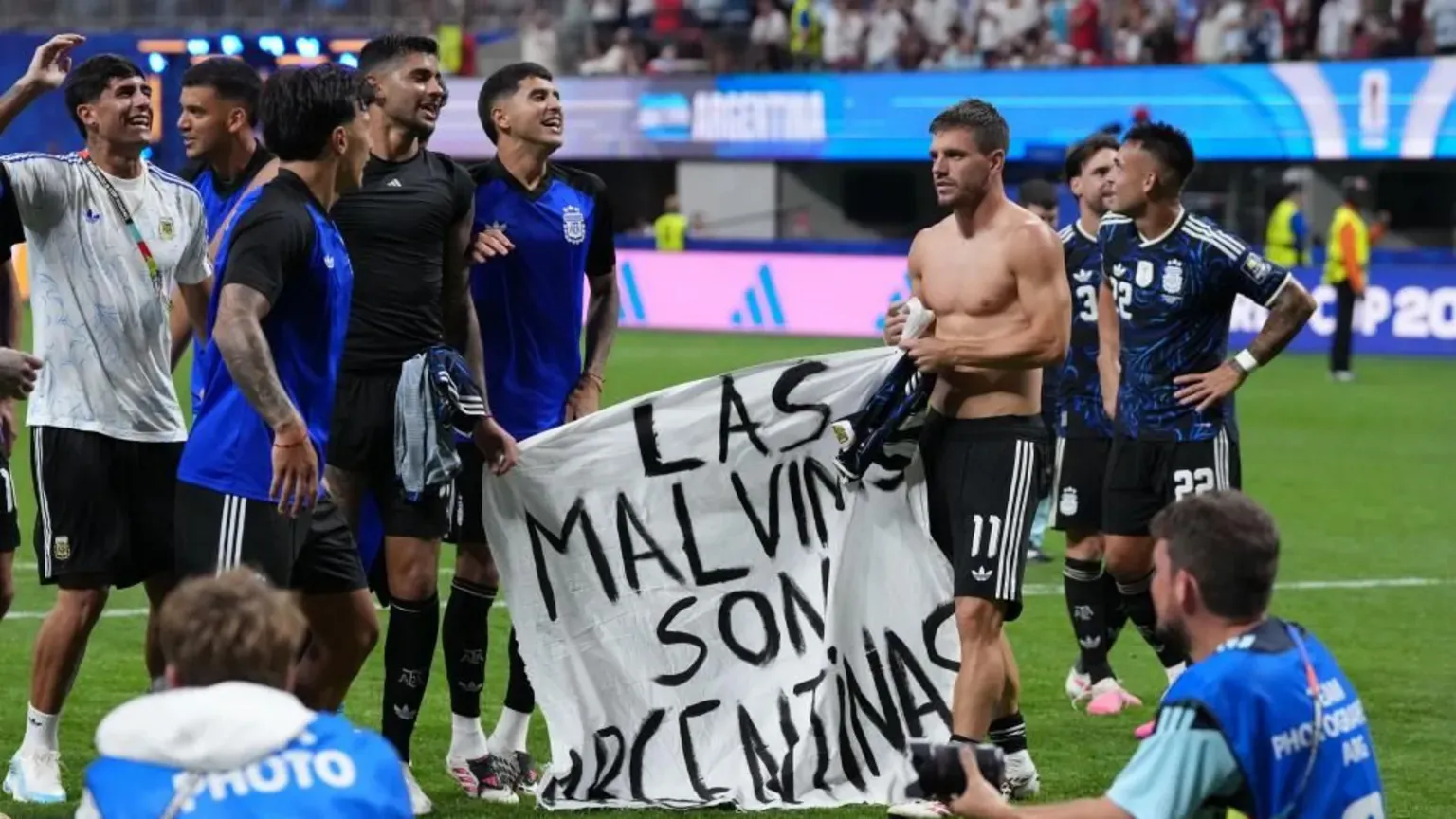
The Argentina national football team recently displayed a banner stating “Las Malvinas son Argentinas” after their World Cup semi-final victory against England in Atlanta. This phrase translates to “The Falklands are Argentine.” The incident occurred during celebrations following their 2-1 win. Players including Lisandro Martínez, Giovani Lo Celso, and Cristian Romero were observed holding the banner.
This display has led to a disciplinary review by FIFA. The organisation’s Stadium Code of Conduct and Disciplinary Code prohibit the exhibition of political, ideological, or offensive banners, flags, and slogans during official competitions. A FIFA spokesperson confirmed that the matter has been referred to its independent Disciplinary Committee, which is currently assessing official match reports to determine if any disciplinary action is necessary under the FIFA Disciplinary Code.
The Falkland Islands, known as Las Malvinas in Argentina, are a British overseas territory located in the south-west Atlantic Ocean. The sovereignty of these islands remains a subject of dispute between the UK and Argentina. In 2013, the people of the Falkland Islands voted overwhelmingly to remain a UK overseas territory, with 1,513 votes in favour and three against, out of 1,517 votes cast.
White House defends team’s actions
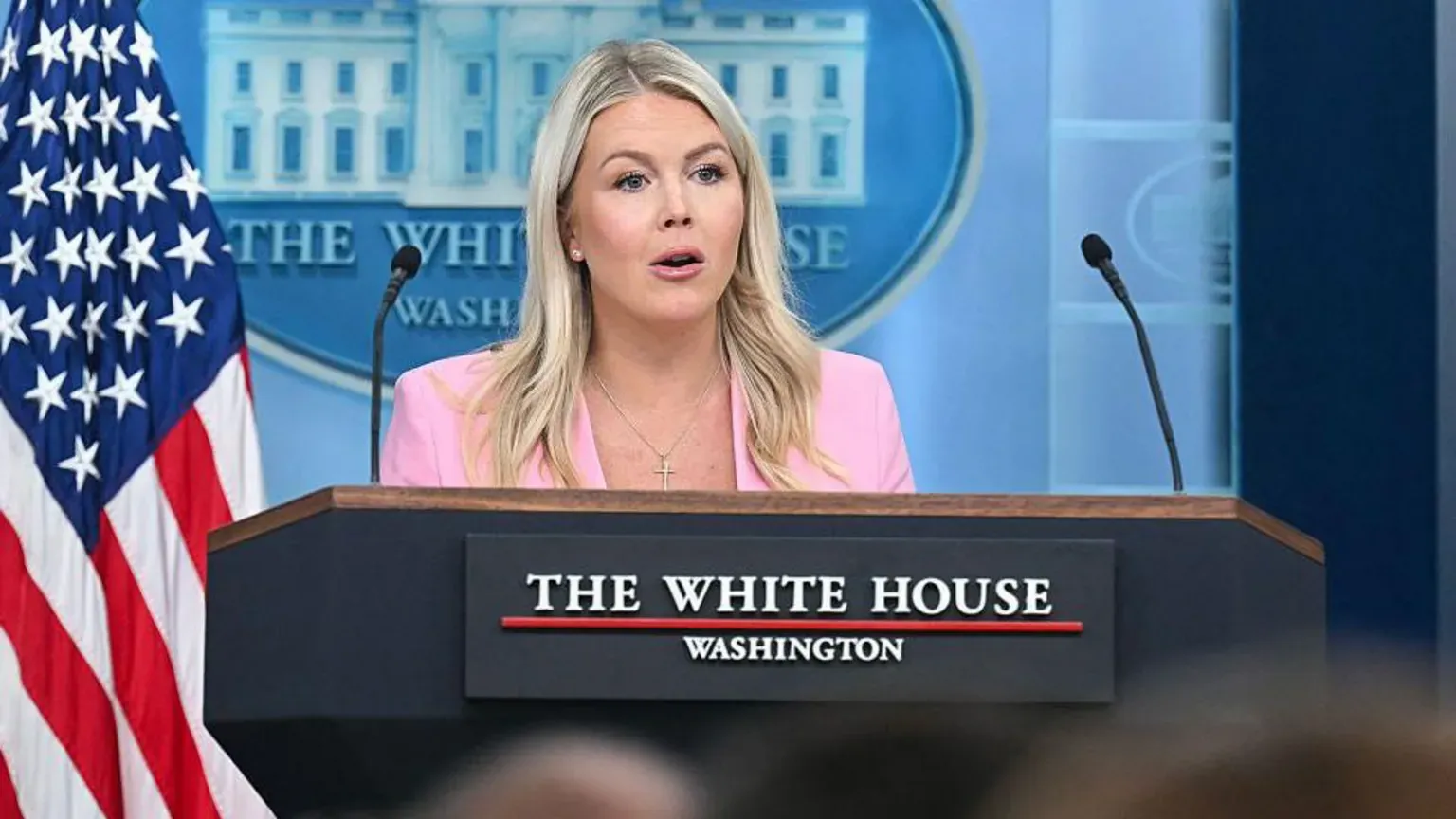
The White House has defended the Argentinian football team’s right to free speech regarding the banner. Andrew Giuliani, head of the White House FIFA task force, stated on Friday that the team had the opportunity and ability to “make those statements” in the US. He referenced free speech protections in the US Constitution, saying, “We believe in our First Amendment rights here in the United States of America.”
This stance from the White House could further intensify the ongoing discussion surrounding the incident. Downing Street has supported calls for FIFA to investigate the matter. The prime minister’s official spokesperson commented, “The World Cup might not be ours, but the Falkland Islands definitely are. Our commitment to the Falklands will never waver.” No 10 also added that any potential action against the players is “a matter for FIFA,” echoing the view that the governing body should investigate.
The government of the Falkland Islands expressed disappointment but not surprise regarding the banner. They hope FIFA will “sanction all behaviour of this nature in line with its own rules.” A statement from the government emphasised, “We do not wish to see politics being brought into sport,” and that the Islands and their people should not be used as “a political football in every conversation about England and Argentina.”
Historical context and previous incidents
The dispute over the Falkland Islands dates back to the early 19th century. Britain first claimed the islands in 1774 and re-established control in 1832. A brief conflict, known as the Falklands War, occurred in 1982 when Argentina’s military government invaded the islands. The 74-day conflict concluded with Argentina’s surrender, resulting in the deaths of 255 British military personnel, three islanders, and 649 Argentine soldiers.
This is not the first time Argentina’s football association has faced scrutiny over similar displays. In 2014, FIFA fined the association £20,000 for holding a banner with the same message before a friendly match against Slovenia. At that time, FIFA stated that the gesture breached rules concerning political action and team misconduct.
Following their 3-2 win over Egypt in the last 16, Argentina players also sang chants referencing the Falklands and Argentine football greats Maradona and Lionel Messi. Argentina vice-president Victoria Villarruel posted on X after Wednesday’s victory, stating, “The Falklands are Argentine. They banned bringing them to the stadium and forgot that we carry them in our blood and our hearts.”
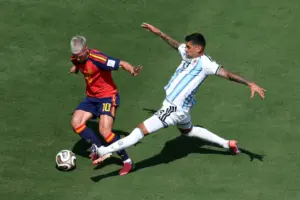
At this stage, FIFA has not announced any sanctions, and Argentina is scheduled to face Spain in the World Cup final on Sunday.
Read Also
Source: bbc.com

Rohan Gupta
Sports Reporter