Sreejesh questions value of India’s foreign chief coach
Indian Olympian P.R. Sreejesh questions the value of the foreign chief coach for the Men’s Hockey Team after their FIH Pro League performance. Read his full sta
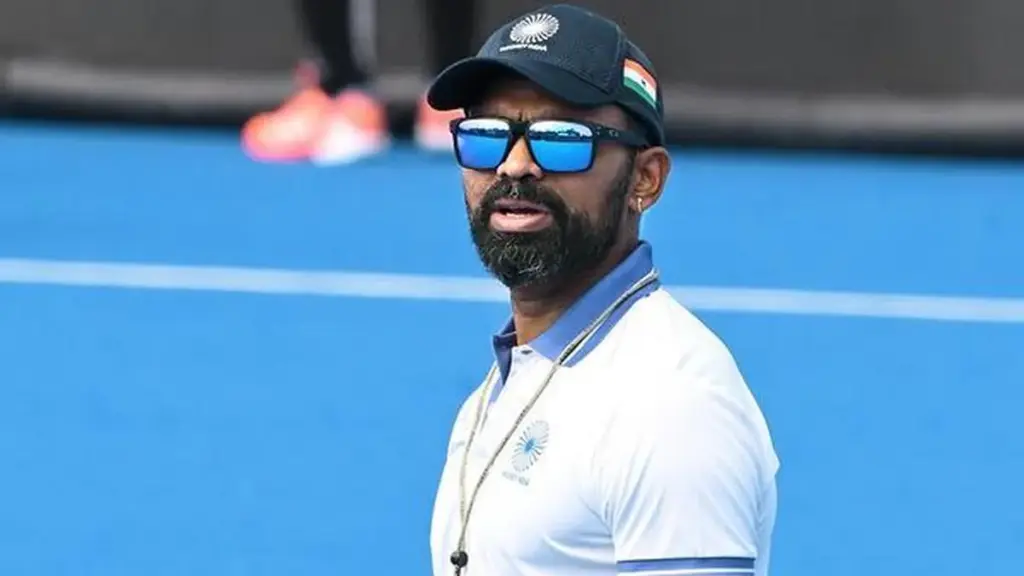
Sreejesh questions the value of India's 'foreign chief coach'
P.R. Sreejesh, a prominent Indian Olympian, has publicly expressed his disappointment regarding the performance of the Indian Men’s Hockey Team in the FIH Pro League. He specifically questioned the effectiveness of the ‘foreign chief coach’ given the team’s recent results in the league.
Sreejesh highlighted that the team finished eighth in the standings during the last two Pro League seasons. He noted that without the participation of Ireland and Pakistan, the team’s position could have been even lower, suggesting a concerning reality about their global standing.
The legendary shot-stopper used social media to share his views, stating that his hockey knowledge might be limited, but this was his opinion. He emphasized that the recent Pro League campaigns have revealed the true state of Indian hockey.
He dismissed common explanations such as experimenting with new players or strategies. While acknowledging the team’s victories in tournaments like the Asian Champions Trophy and the Asia Cup, Sreejesh asserted that these continental events are no longer suitable benchmarks for evaluating India’s global position in hockey.
During the last two Pro League campaigns, both under the guidance of coach Craig Fulton, India consistently placed second from the bottom. However, it is noted that the team has used the global event as an opportunity to test different playing styles and integrate new players into the squad.
Despite the team’s lower finish in the Pro League, there have been instances where this performance did not reflect their capabilities in other major tournaments. For example, a Fulton-coached India team finished seventh in the Pro League season, but secured a bronze medal at the Olympics in Paris less than two months later.
Sreejesh’s critique also extended to the financial investment in the foreign chief coach. He questioned whether spending approximately ₹25 lakh (€24,286) per month on a foreign chief coach is solely for dominating Asian competitions, or if the investment is aimed at making India a genuine medal contender in events like the World Cup, Pro League, and Olympics.
He argued that being content with regional success while struggling against elite international teams should not be the standard for Indian hockey. Sreejesh believes that true support for the team involves asking difficult questions to push for higher standards, rather than accepting lower expectations.
The Olympian also previously served as the head of India‘s junior programme for a couple of years. His contract was not renewed by the federation, and he was replaced by Frederic Soyez. Under Sreejesh’s leadership, the junior team achieved a bronze medal at the Junior Men’s Hockey World Cup.
Sreejesh highlighted that India‘s dominance over other Asian teams in continental events means that winning such tournaments is now largely expected. He pointed out that the real challenge lies in consistently competing with the world’s top teams.
The Pro League offers qualification tickets for major tournaments, including the World Cup (2024-25) and the Olympics (2025-26). However, a lack of success in the Pro League does not always translate to overall failure, especially when the team’s focus might be on other qualifying events.
For instance, India had a more straightforward path to securing their World Cup ticket in 2025. This led to their primary focus being on winning the Asia Cup in Bihar in 2025, rather than expending significant energy on winning the Pro League in 2024, which occurred months before the Olympics.
Sreejesh reiterated that his criticism is not against Indian hockey but stems from a genuine concern and desire for improvement. He emphasized that real supporters challenge the status quo to achieve better results.
The Pro League table, according to Sreejesh, accurately reflects India‘s standing against the world’s best teams. He believes that the team’s ability to beat Pakistan, even at the junior level, also indicates the significant gap between India and the rest of Asia.
Craig Fulton has been approached for comment regarding these observations.
Performance in Pro League and Olympic Success
The Indian Men’s Hockey Team has shown varied results across different competitions, leading to discussions about their overall strategy and performance. While the team finished eighth in the last two seasons of the FIH Pro League, this performance does not always align with their achievements in other significant tournaments.
Under coach Craig Fulton, the team’s seventh-place finish in the Pro League season was followed by a bronze medal win at the Olympics in Paris within two months. This suggests that the Pro League might be utilized for different strategic objectives, such as player development and tactical experimentation, rather than solely focusing on winning the league.
The Pro League serves as a pathway for qualification to major international events. However, India‘s strategy has sometimes prioritized other continental tournaments for securing qualification. For example, the team focused on winning the Asia Cup in Bihar in 2025 to secure a World Cup ticket, rather than dedicating all efforts to the Pro League in 2024.
This approach indicates a strategic allocation of resources and focus, where certain tournaments are targeted for specific outcomes like qualification, while others might be used for broader team development. The disparity in performance between the Pro League and events like the Olympics highlights this nuanced strategy.
Questions on Investment and Standards
P.R. Sreejesh has raised pertinent questions regarding the financial investment in the foreign chief coach and the expected standards for Indian hockey. He specifically questioned the monthly expenditure of approximately ₹25 lakh (€24,286) on a foreign chief coach.
Sreejesh’s concern is whether this significant investment is primarily aimed at ensuring dominance in Asian competitions, or if it is intended to elevate India to a position where they are consistent medal contenders at the World Cup, Pro League, and Olympics. He believes that achieving regional success while struggling against the world’s top teams should not be the accepted norm for Indian hockey.
He argued that while winning tournaments like the Asian Champions Trophy and the Asia Cup is commendable, these events no longer accurately reflect India‘s global standing. The gap between India and other Asian teams is evident, making victories in these continental competitions an expectation rather than a measure of global competitiveness.
Sreejesh emphasized that true supporters of Indian hockey should ask tough questions to demand higher standards and avoid complacency with regional achievements. His comments underscore a desire for the team to consistently perform at an elite international level, aligning with the substantial investment made in its coaching staff.
The debate initiated by Sreejesh highlights a critical juncture for Indian hockey, where the balance between strategic development and achieving top-tier international results is under scrutiny. The discussion revolves around whether the current approach is effectively preparing the team to compete with the best globally, or if it is merely ensuring continued success within the Asian continent.
The ongoing conversation around the team’s performance and coaching strategy underscores the passion and high expectations within the Indian hockey community. The focus remains on how Indian hockey can bridge the gap between its regional dominance and its aspiration to be a consistent medal contender on the global stage, as evidenced by the bronze medal win in Paris.
The discussion also touches upon the role of the Pro League in the broader scheme of Indian hockey‘s objectives. While it offers qualification opportunities, its primary function for the Indian team appears to be multifaceted, encompassing both competitive play and strategic development for future major tournaments.
Sreejesh’s comments, made on July 2, 2026, reflect a call for introspection and a re-evaluation of the team’s long-term goals and the means to achieve them.
Read Also
Source: newindianexpress.com

Rohan Gupta
Sports Reporter